How to separate haul road regrading from real extraction in a monthly pit volume read
A raw elevation diff across a pit nets haul road cut-and-fill in with ore and waste movement. Here's how to pull those apart before you report a number.
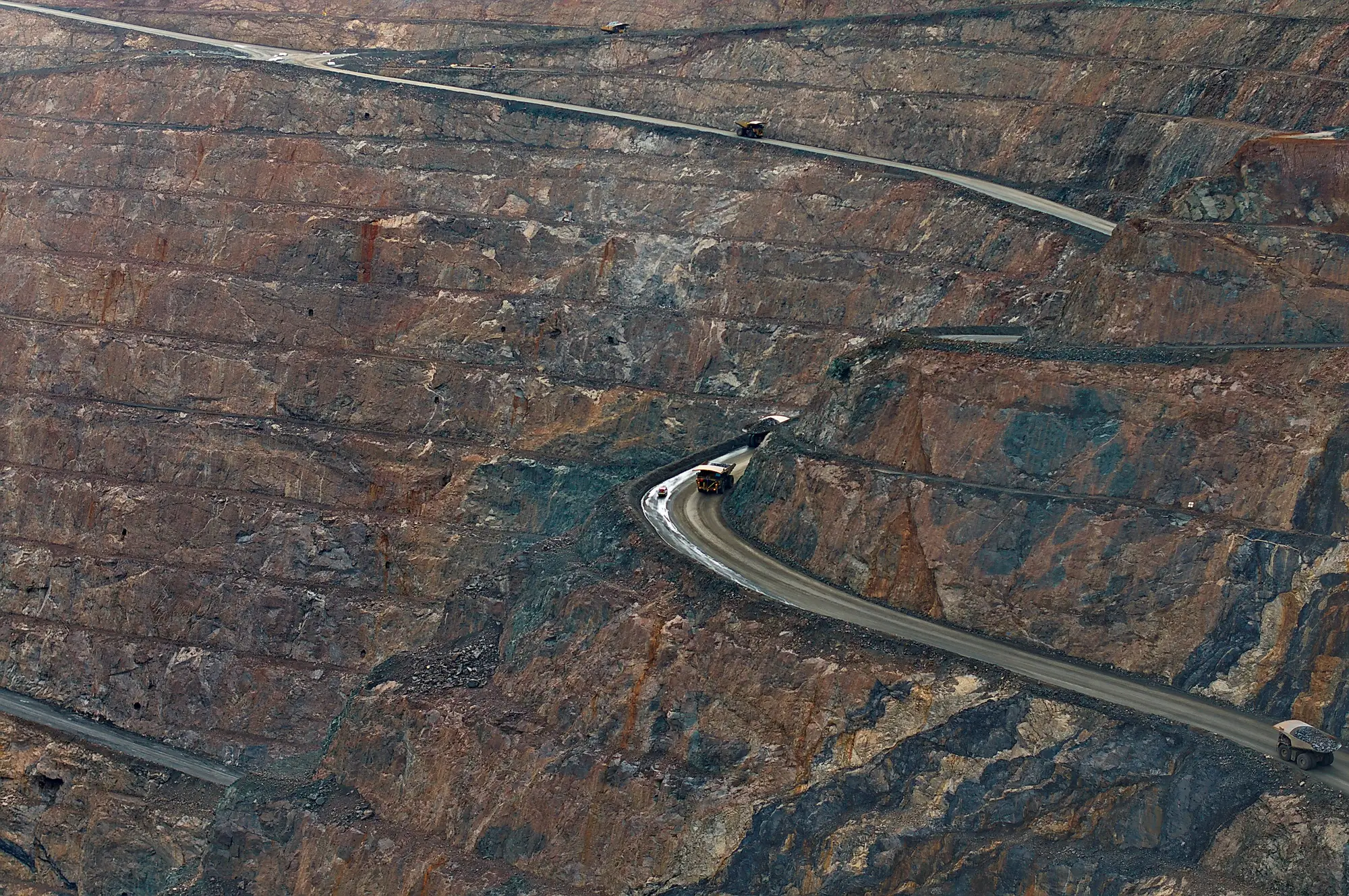
Take two elevation surfaces a month apart, difference them across the pit footprint, and you get a volume number. That number captures everything that changed the ground's shape that month, and on an active pit that includes a lot more than digging.
Haul roads get regraded constantly. Ramps widen as benches advance, switchbacks get rebuilt when a cut face moves past them, berms get pushed up or knocked down for safety, and running surface gets built up with waste rock to keep trucks moving in wet weather. Every one of those is a real volume change. None of it is tonnage coming out of the pit toward the mill or the dump. If you difference the whole pit polygon without accounting for this, a month with heavy ramp work can show more "extraction" than actually happened, and a month where crews mostly just dug can look soft by comparison if road fill elsewhere ate into the net.
Where the road signal shows up in the surface diff
The tell is usually location and shape. Extraction volume change sits on the working face and the pit floor, and it moves in one direction: down, as material comes out. Haul road regrade shows up as a thin, linear band following the ramp alignment, and it can go either way in the same month. A ramp gets cut down a few meters to ease grade in one section and built up with fill fifty meters further along. On a raw volume-change raster this reads as adjacent patches of loss and gain that don't correspond to any bench advance in the mine plan.
Switchback rebuilds are the worst offenders because they move the largest footprint in the shortest time. A single ramp relocation can shift tens of thousands of cubic meters in a month with zero tonnes going anywhere near the crusher. If your monthly number is supposed to track against a loan covenant or a plan milestone, that's the kind of swing that gets questions asked, and you want an answer ready before the question comes.
Carving the haul road corridor out of the comparison polygon, or at minimum running it as its own separate diff, cleans up a lot of this noise. Keep a static buffer around the ramp centerlines, pulled from the mine's own design file or traced once from the surface, and difference inside and outside that buffer separately. The outside-corridor number is a much cleaner read on bench advance. It still won't be perfect: benches get regraded for drainage too, and backfill or progressive rehab inside the final pit shell will show up as "loss" that's fill, not extraction. But it strips out the single largest source of non-extraction volume change on most active pits.
What a monthly elevation difference still can't tell you
Even after you've pulled the road corridor out, a two-surface volume read has limits worth stating plainly rather than discovering later. It tells you how much material left, or arrived at, a location between two dates. It does not tell you whether that material was ore or waste, what grade it carried, or which dump or stockpile it ended up on. It also compresses a month of daily truck cycles into one number, so a pit that dug hard for three weeks and then sat idle for one looks identical to a pit that dug steadily the whole time. If reconciliation against reported tonnes matters to you, treat the volume figure as one input among several, and run it through a bulk density assumption before it becomes a tonnage number at all.
None of that makes the read less useful. It makes it a specific thing: an independent check on how much ground moved, measured from outside, that you can set against what the operator is telling you and against the plan. Pit Progression builds that monthly number from paired elevation surfaces and hands you both surfaces along with the figure, so you can run exactly this kind of corridor exclusion yourself instead of taking a single net number on faith.
If a haul road rebuild or a quiet month on the face has ever thrown your volume reconciliation off, it might be worth putting an independent monthly read against your own numbers.