The month the clouds didn't clear and the covenant date didn't move
A field note on what happens when the wet season sits on top of the pit right when the reporting date in the loan agreement arrives.
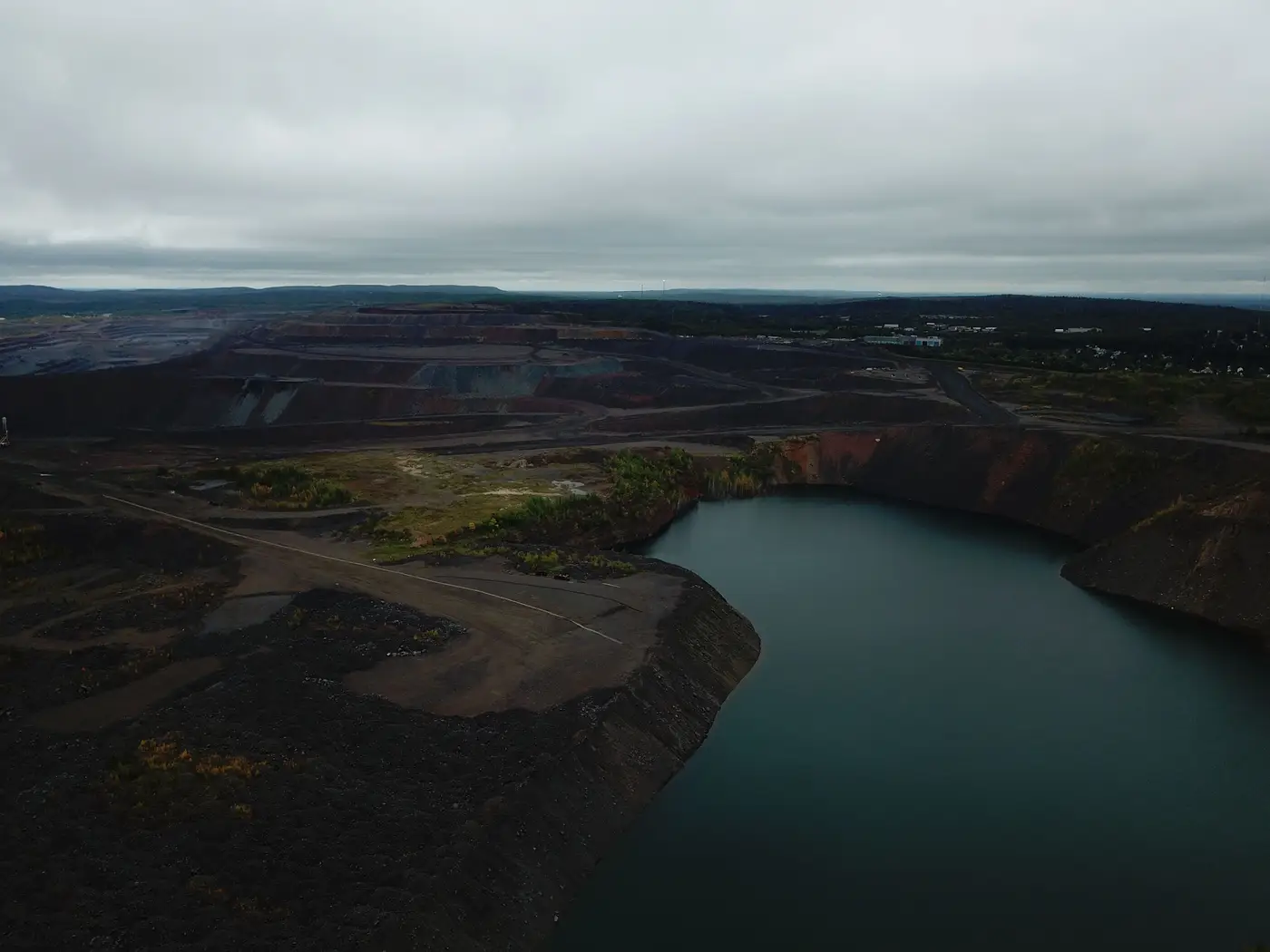
There's a particular kind of quiet that settles over a monitoring team when the fifth of the month arrives and the archive still shows cloud over the pit. Not a storm, necessarily. Just that low grey ceiling that sits over a basin for three weeks at a stretch during the wrong season, the kind that shows up as a blank or a milky smear where the pit floor should be.
The loan agreement doesn't care about any of that. The reporting date in a credit facility is a line item negotiated by lawyers who were thinking about quarters and fiscal years, not about whether the site in question happens to sit in a belt that fogs in for half of its wet season. Covenant dates get set once, at close, and then they just repeat, month after month, on the calendar regardless of what the sky is doing over the pit.
This is the part of the job nobody puts in the slide deck. Optical stereo, whether it's coming off a satellite pass or a chartered flight, needs two clean looks at the same ground: one for last month's surface, one for this month's. If either date is socked in, there's no elevation difference to pull, because there's no elevation on one side of the subtraction. You can't average your way around it and you can't interpolate a pit floor that nobody imaged. You either wait for the next clear window or you find a way to get under the cloud deck.
We've had months where the satellite tasking window closed on schedule and came back with a scene that was eighty percent cloud over exactly the bench we needed. The financier on the other end of that number doesn't want to hear about atmospheric rivers. They want a figure to set against the draw schedule, and they want it dated to the covenant, not to whenever the weather obliged.
The honest answer, most of the time, is that you move to an aerial pass. A plane or a drone can go up under most ceilings that would blank out a satellite scene, and it buys back the date even when the sky upstairs hasn't cooperated. It's not a free substitution. Flight logistics, site access, and local airspace all have their own calendars, and they don't always line up neatly with a reporting deadline that was set years before anyone thought about which weeks the fog sits in. But it's a real path to a number, which a blank scene is not.
What's worth saying plainly, because it gets glossed over in a lot of monitoring pitches, is that the elevation read is only as good as the two clean surfaces behind it. A volume figure built from a cloud-contaminated scene isn't conservative, it's wrong, and it's worse than no number at all if it gets dropped into a covenant test as though it were solid. The discipline that actually earns trust on the financing side isn't producing a number every single month no matter what. It's being straight about which months gave you clean ground on both dates and which didn't, and having a fallback ready for the ones that didn't.
That's the practical case for not betting the whole read on a single satellite tasking order and nothing else. If the method behind the number can reach for an aerial stereo pass when the sky won't give you a clean scene, the covenant date stops being hostage to the weather over one particular pit on one particular week. Pit Progression builds its monthly read from whichever stereo source gives you two clean surfaces for the month, satellite when it's available, aerial stereo when it isn't, so the date on the loan document gets a real figure instead of an asterisk.
The clouds will do what they do. The date on the covenant won't move for them, so the method behind the number has to.