Moved material: why your mine plan and your loan covenant aren't counting the same thing
A mine plan's tonnage categories and a loan covenant's volume test measure different questions. Here's how the two numbers diverge and how to reconcile them.
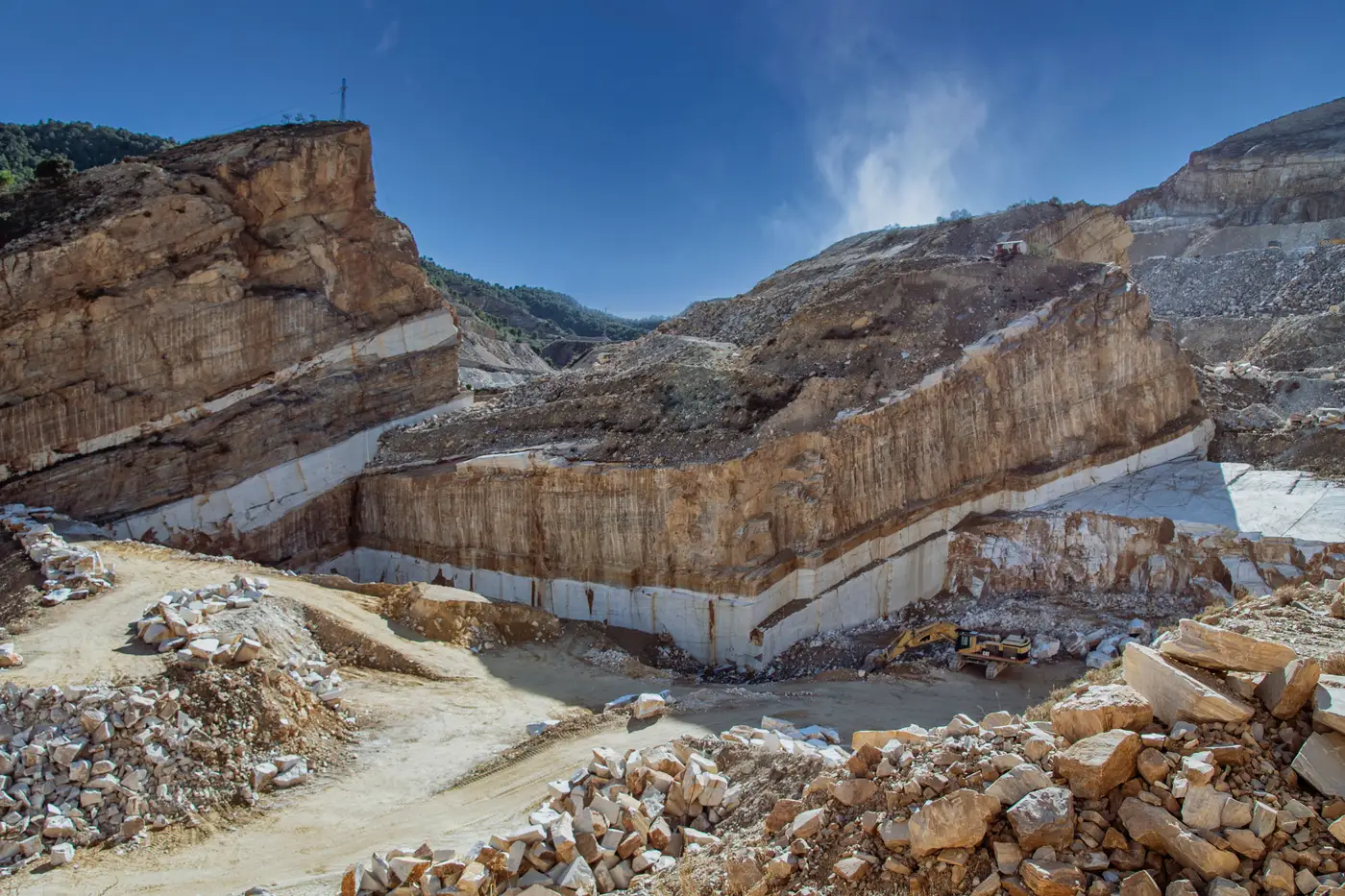
A mine plan tracks moved material by category: ore tonnes to the mill, waste tonnes to the dump, maybe a split across stockpile destinations or grade bins. It's built bottom-up from blast patterns, truck counts, and shovel dig rates, then rolled into a monthly or quarterly figure that ties back to the geological model. That number answers one question: is the operation following the sequence it was designed around.
A loan covenant asks something narrower. How much rock left the ground this period, regardless of where it went or what grade it carries. The covenant test usually doesn't care about the ore-waste split or whether material hit the crusher or sat on a stockpile waiting for a better price. It cares about total volume extracted against a minimum draw-down schedule, because that schedule is what the reserve depletion curve in the loan was priced against.
Mine plan volume definition
In the plan, moved material is granular by design. A planner wants ore tonnes specifically, because ore tonnes drive mill feed and mill feed drives revenue. Waste movement matters mostly as a check that stripping is keeping pace, so ore access doesn't get pinched a few phases down the line. All of it is self-reported, usually by the mine's own survey or reconciliation team, built from truck GPS and belt scales the mine itself owns and calibrates. None of that makes it wrong. It just means the number comes from inside the operation it's measuring.
Covenant volume test
The covenant usually strips all that detail back to one figure: cubic meters or tonnes removed from the pit footprint over a defined period, checked against a minimum rate written into the loan documents. It's a solvency check more than an operations check. A lender doesn't need the ore-waste ratio to confirm the borrower is drawing down the reserve on schedule. What a lender needs is a figure nobody on site had a hand in producing, because the point of the covenant is to catch underperformance before it shows up in a missed payment.
That's where the two definitions pull apart. A mine can report plan-consistent ore tonnes all quarter and still fall short on total volume moved, if a chunk of waste stripping gets deferred or a pit phase gets reshuffled without the tonnage categories shifting much on paper. The plan's internal accounting stays tidy while the actual hole in the ground grows slower than the covenant schedule assumes.
Extraction volume vs plan: reconciling the two
The cleanest way to reconcile them is to go around both self-reported systems and measure the pit directly. Take an elevation surface of the whole pit footprint at the start of a period, take another at the end, and difference them. That gives a volume figure that doesn't care about ore-waste splits, truck counts, or which instrument logged the mine's own tonnes. It's simply how much material left the ground, which is close to what most covenant volume tests are asking for, even when the loan document uses mining-plan language to say it.
That won't replace the plan's granularity. A financier doesn't need the block model or the grade reconciliation, just a check that the hole is growing at the rate the loan assumed. And a planner checking plan compliance still needs the mine's own production detail, since an elevation difference alone can't separate ore from waste.
What it gives you instead is a monthly number that sits outside the chain of people with an interest in how it reads. Pit Progression builds that figure from satellite or aerial stereo imagery, no site visit required, and delivers it alongside the two elevation surfaces it came from, so you can check the math rather than take someone's word for the total.
If the next reporting period needs a volume figure the mine didn't produce itself, that's the gap worth closing first.