In-situ density and the bank cubic metre to tonne conversion
In-situ density is what turns a pit's elevation-based volume into a tonnage figure. How the density factor works, and where it goes wrong.
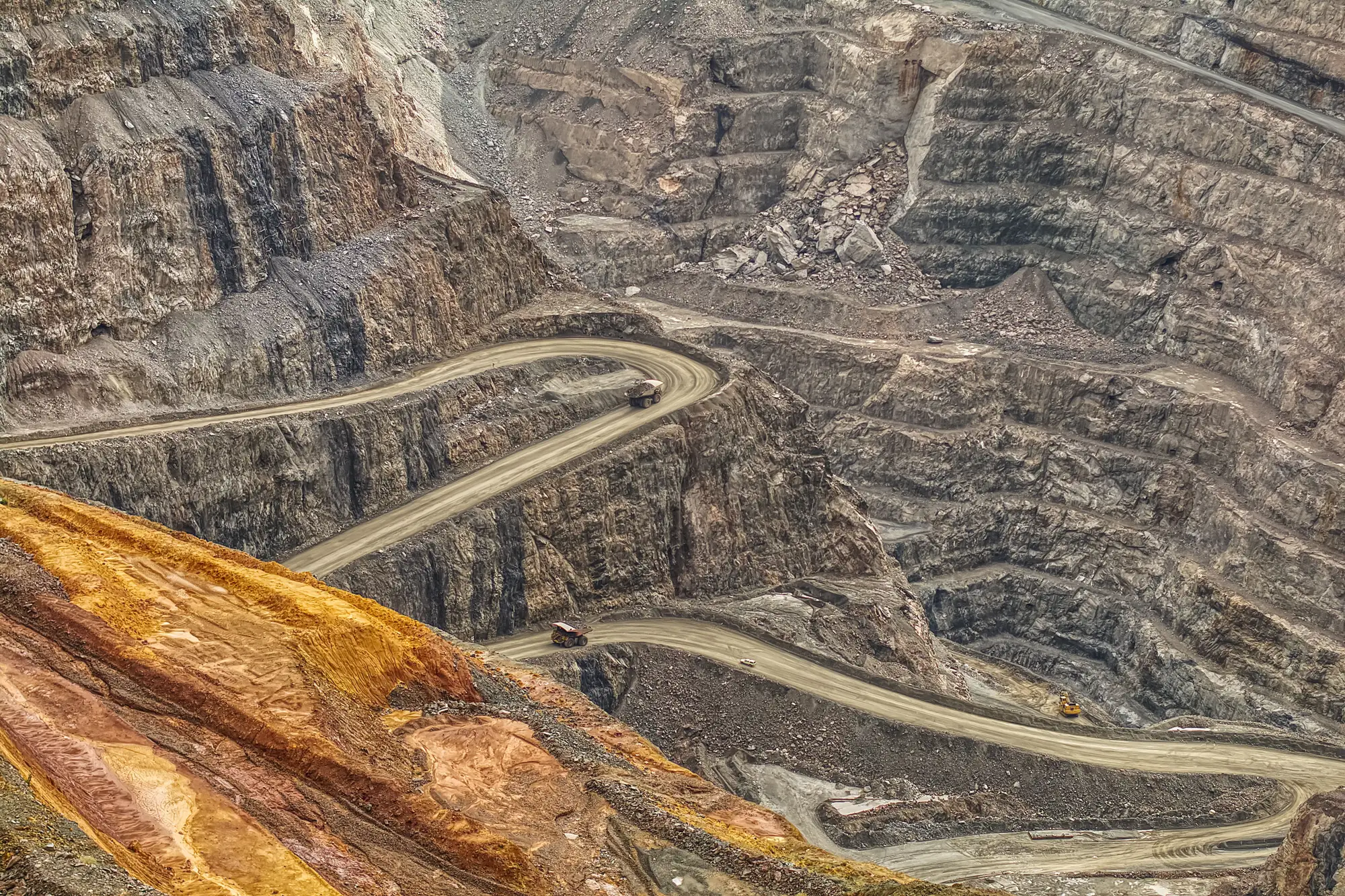
Volume is geometry, tonnage is what the covenant reads
A photogrammetric or lidar comparison of two elevation surfaces across a pit gives you a volume in bank cubic metres (BCM). That's the rock or ore still sitting in its original position, undisturbed, before anyone blasted or loaded it. Tonnage is the number that shows up on a covenant test, a reserve statement, or a royalty invoice. Getting from one to the other needs an input: in-situ density, sometimes called the density factor, specific gravity, or just "bank density" on site.
In-situ density is the mass of the rock mass per unit volume as it sits in the ground, before blasting fractures it and before it loosens, swells, or compacts somewhere else. For a given deposit the geology team pins this down from core assay data, and it's specific to that rock. A porphyry copper pit and a bauxite laterite don't share a density figure, and two benches in the same pit can carry different numbers if the lithology changes between them.
Where the conversion goes wrong
Mine reports throw around three separate density concepts, often without saying which one they mean.
In-situ (bank) density describes rock still in place, the figure used to convert a volumetric pit model into reserve tonnes. Loose (bulked) density describes the same material after blasting and loading, lower because broken rock carries air gaps between fragments. Compacted density describes material after it's been dumped and run over by haul trucks, which partially reverses the bulking.
A swell factor, or bulking factor, is the ratio between loose and bank density, typically somewhere between 1.3 and 1.6 for hard rock. Trouble starts when a reconciliation report quotes tonnes moved off a truck count using loose density, and someone tries to cross-check that figure against a pit volume built from elevation surfaces, which measures bank volume because the ground hasn't bulked yet at that point. Apply the wrong density factor to bridge the two and the resulting tonnage can be off by 30% or more. On a covenant test that's not a rounding error, it's the difference between a pass and a breach letter.
Turning a pit volume into a tonnage figure
The arithmetic itself is plain once both inputs are right: tonnes equal bank cubic metres multiplied by in-situ density in tonnes per cubic metre. A pit that drops by 400,000 BCM in a month, applied against a 2.7 t/m³ density for that ore body, reads as roughly 1.08 million tonnes extracted. The volume side is a measurement problem, comparing two surfaces across the pit footprint and netting out what moved between them. The density side is a geology input that comes from the resource model or an independent assay, not from a satellite pass or a stereo image.
That split matters for anyone checking extraction against a mine plan rather than just watching for activity on site. A monthly volume read tells you how much rock left the pit. Applying the mine's own in-situ density figure to that volume is what turns it into the tonnage number the plan or the loan agreement is written against. It's worth asking which density figure, bank or bulked, sits behind any tonnage number a site reports back, because the two produce very different answers off the same hole in the ground.
Pit Progression measures the volume side of that calculation independently, month over month, from stereo elevation surfaces rather than from figures the mine produces itself, and the bank cubic metre number that comes out is what a planner or financier runs their own density factor against. If an independent monthly volume read is what's missing from your reconciliation, that's the gap this fills.