What is ore dilution, and why a pit volumetric read won't show it
Ore dilution lives in the grade, not the moved volume. Why a monthly pit elevation read can't catch it, and what reconciliation does.
What dilution actually is
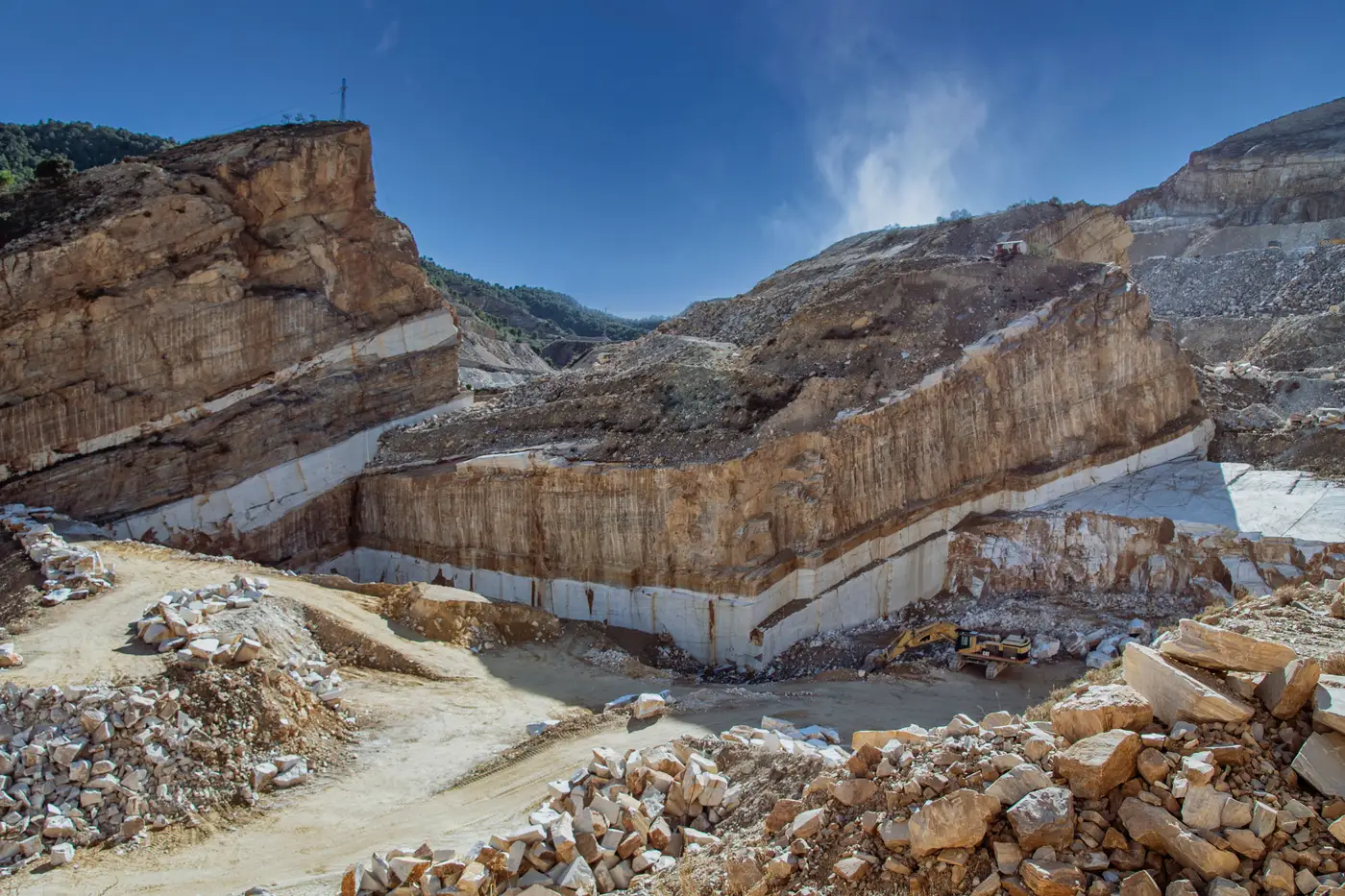
In an open pit, the block model draws a line between ore and waste based on assay data and a cutoff grade. The bench face doesn't respect that line nearly as cleanly. Blast fragmentation mixes material across the contact. A loader bucket pulled right at that boundary picks up some of each. That's dilution: waste rock that ends up counted in the ore stream, or ore grade that gets watered down because it was mucked together with material that should've gone to the waste dump.
Every resource model carries a planned dilution factor built in from the start. The mill then reports an actual head grade, and the gap between planned grade and what the mill is actually seeing, bench by bench, is one of the more argued-over numbers at any operation. It's a geology and grade-control question. It has nothing to do with how much ground moved.
Why a volumetric read is silent on it
A monthly elevation difference across the pit, last month's surface against this month's, run through a density assumption, gives you a volume and a modeled tonnage of material removed. That number answers a specific question well: how much rock came out this month, against how much the plan called for.
It has nothing to say about what was in that rock. Picture two scenarios that produce the identical elevation surface: a bench mined exactly to the planned ore/waste contact, or that same bench mined two meters wider to chase wall stability, pulling in waste that was never supposed to be hauled as ore. The pit floor drops by the same amount either way. The elevation surfaces look the same. The grade going to the mill does not.
A volume figure measures displaced rock and nothing else. Treating it as a stand-in for everything happening in the pit, grade included, is where people get tripped up.
Pit volume vs. tonnage, and where dilution actually shows up
Volume and tonnage get used interchangeably and they shouldn't be. Volume comes straight off the elevation difference. Tonnage needs a density assumption layered on top, in situ rock density for waste, often a different bulk density for broken or stockpiled ore. Get the density wrong and the tonnage estimate drifts even when the underlying volume read is solid.
Dilution sits one layer deeper than either figure. It lives in the grade, not the mass. A heavily diluted month can hit its planned tonnage and its planned volume within a rounding error and still come up short on contained metal, because some share of what moved was never ore to begin with. The number that exposes dilution is the reconciliation between planned grade and mill-reported grade against actual throughput, and that reconciliation runs on sampling and assay turnaround, not on an elevation surface. No remote volumetric read, independent or otherwise, touches it.
What this means when you're tracking extraction against plan
A lender watching a covenant written around monthly moved material, or a planner checking a site's self-reported extraction figures, has a real reason to want an outside number. An independent volumetric read answers "did they move what they said they moved," which is worth knowing given the incentive either side has to round that number in its own favor.
It won't tell you whether the material that moved was the right material. If the dilution question matters to the covenant or the model, pair the volume reconciliation with the mine's own grade-control reporting. They're measuring different things entirely, and a site can be hitting its moved-volume targets while running dilution heavy enough to worry anyone counting on the contained metal.
Pit Progression builds that independent monthly volumetric read from satellite or aerial stereo, no site visit needed, delivered as a volume figure plus the two elevation surfaces behind it. If you've got a pit where the moved-material number needs to come from somewhere other than the mine's own reporting, that's the gap this fills.